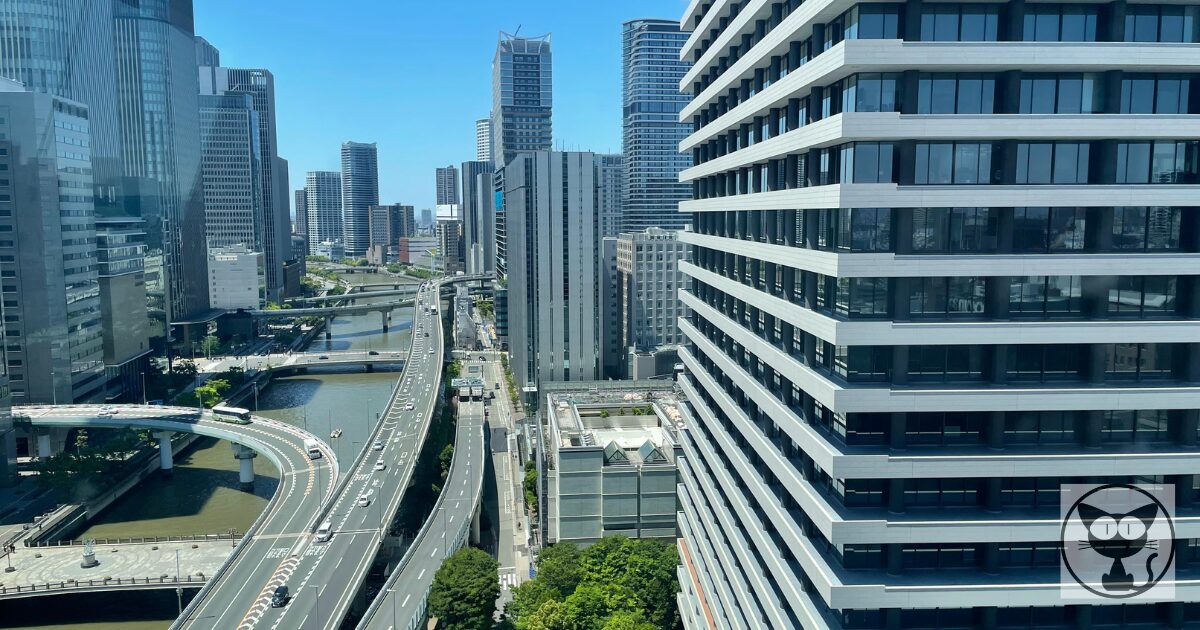
The noise of the expressway can be heard. And yet, this town facing the river has a somewhat calm atmosphere about it.
Dojima-hama 1-chome and 2-chome. A small business district where you can walk from one end to the other in about 20 minutes.
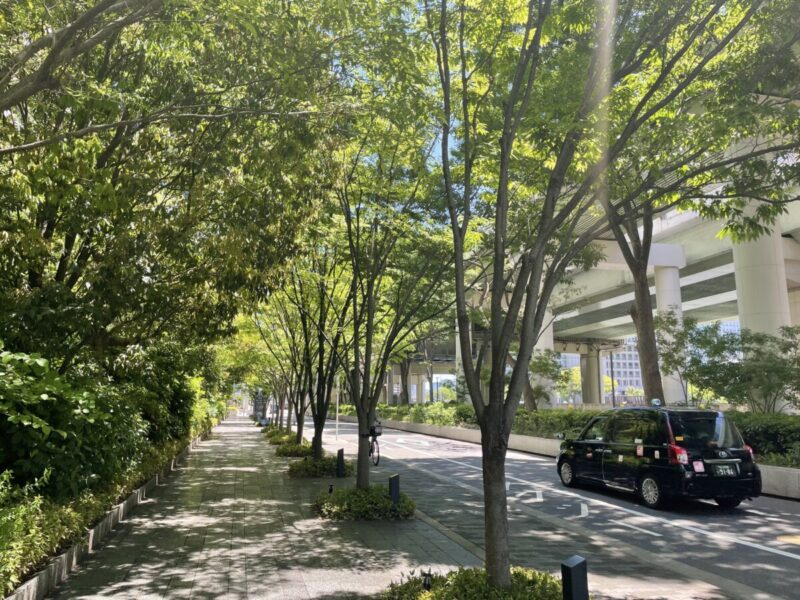
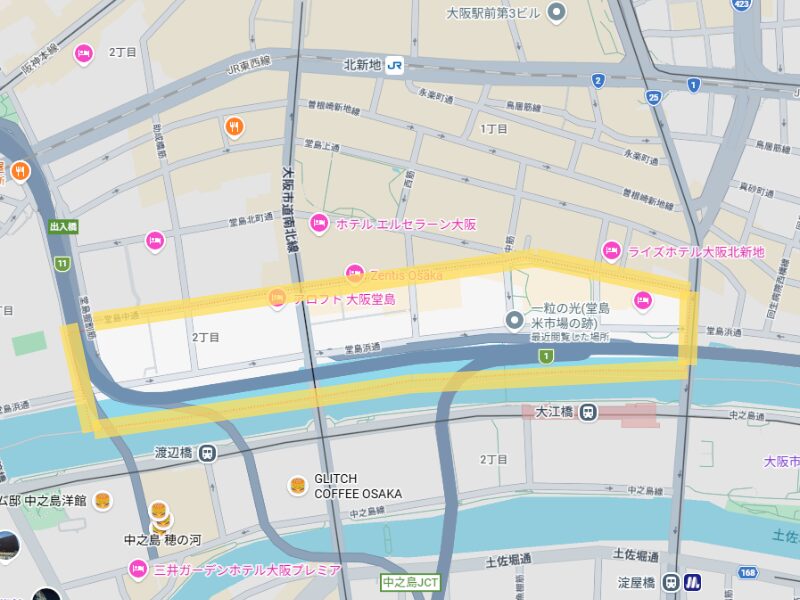
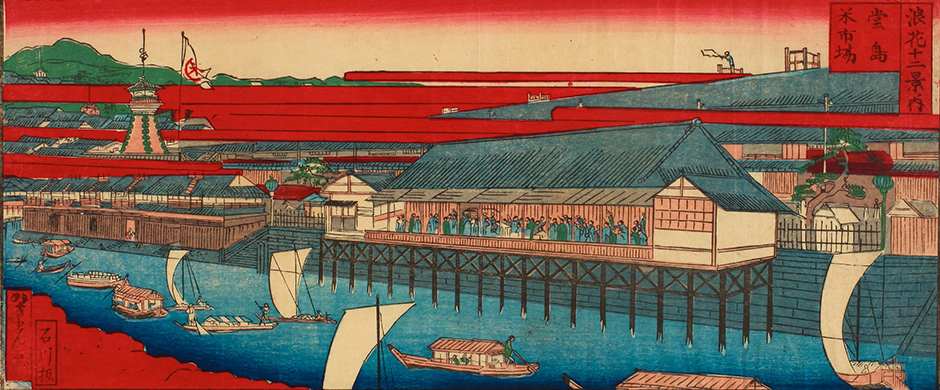
Crossing the Nakanoshima Garden Bridge that spans the Dojima River heading north, this place used to have what was called the “Dojima Rice Market,” an officially authorized market by the Edo shogunate.
During the Edo period, the Nakanoshima area of Dojima had rows of storage houses belonging to daimyo (feudal lords) from various domains throughout the country.
Back then, rice was currency. It was an era when a daimyo’s (feudal lord’s) domain was measured in koku (a unit of rice), and samurai salaries were all determined in rice.
The annual tribute rice collected by the various han (domains) first gathers here in Osaka.
Rice brokers conducted transactions there, and those became the standard for rice prices throughout the country.
Osaka’s Dojima was Japan’s largest market, so much so that it was called the “kitchen of the realm”.
The merchants of Osaka at that time came up with new methods for buying and selling transactions.
The price of rice swings wildly depending on the weather, so they developed a system of fixing prices before harvest and trading accordingly — called “chōai mai torihiki” — what we’d call futures trading today.
The world’s first system of depositing a guarantee called “shikigin (敷銀)” and settling only the difference is said to have become the prototype for the Chicago Mercantile Exchange, the world’s largest futures market.
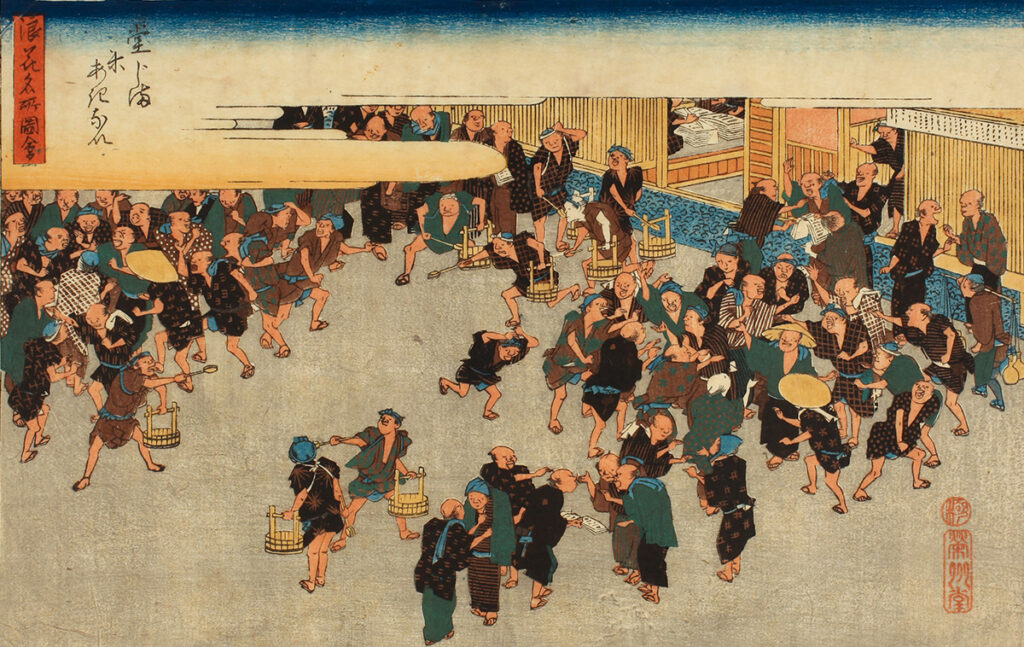
At 2 PM, even when the signal for the end of trading is given, the heated merchants don’t disperse and continue buying and selling. It’s said that the “mizukata-yaku (water distributor officials)” would force an end to it by sprinkling water.
It was a place brimming with that much heat and energy.
That market also closed its doors in 1939 due to wartime government controls.
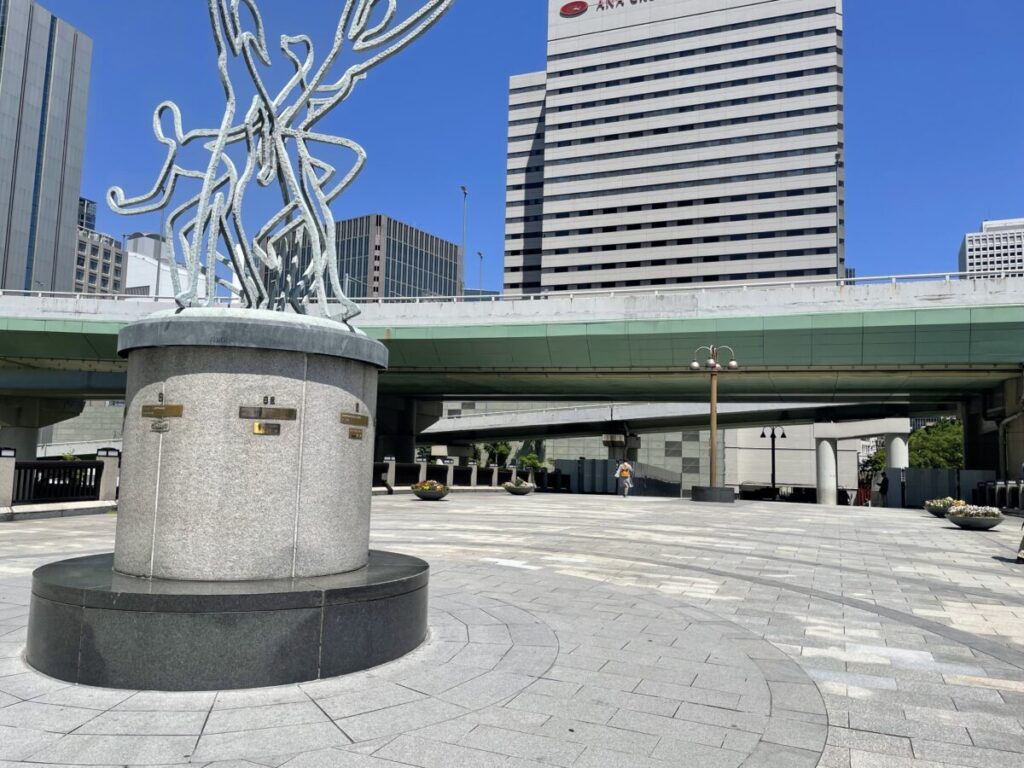
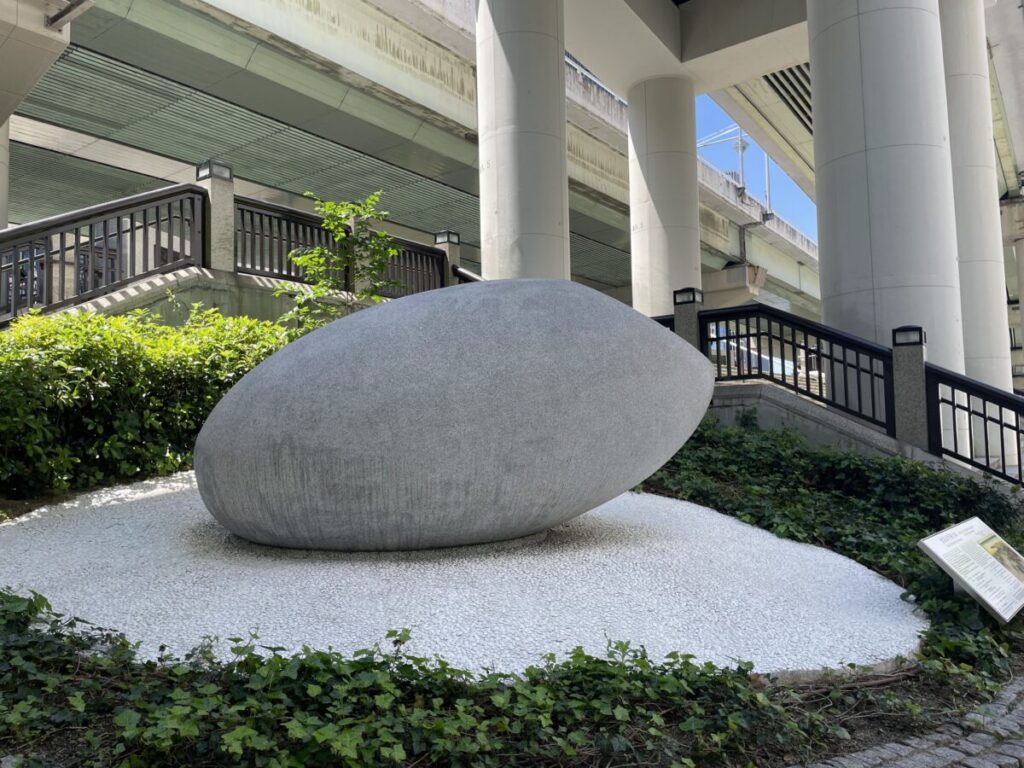
Currently, on the site where the market once stood, Ando Tadao’s monument called “Hitotsubu no Kome” (A Single Grain of Rice) stands quietly.
It’s a place where I feel respect for the dignity and pride that Osaka merchants had back then.
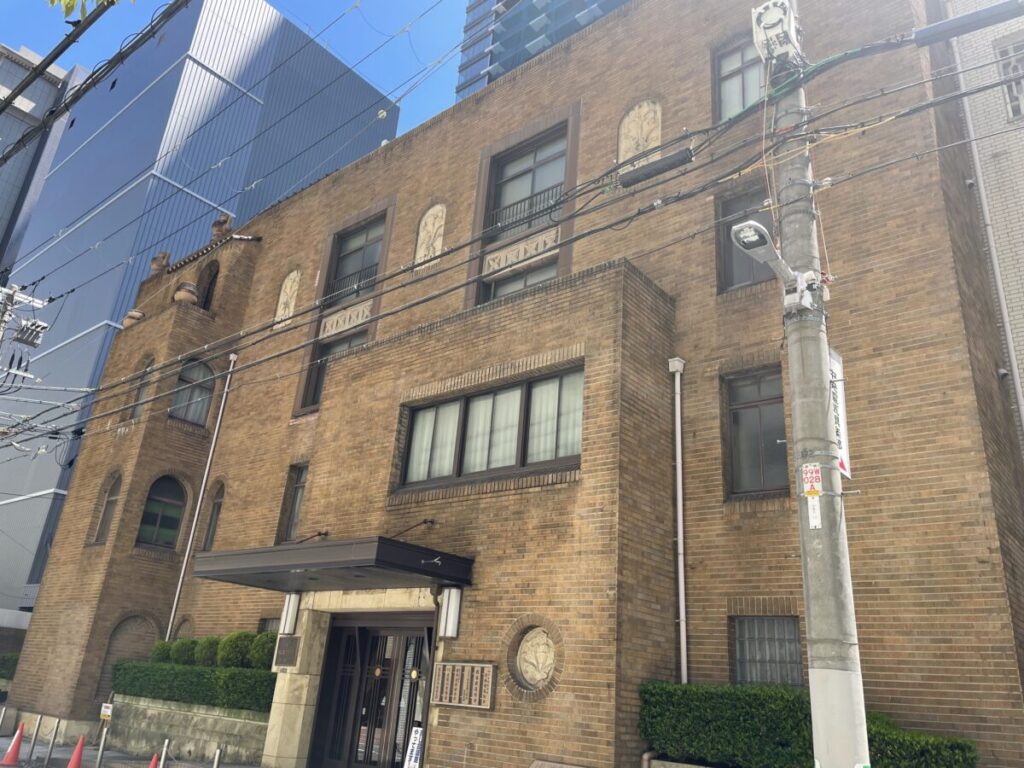
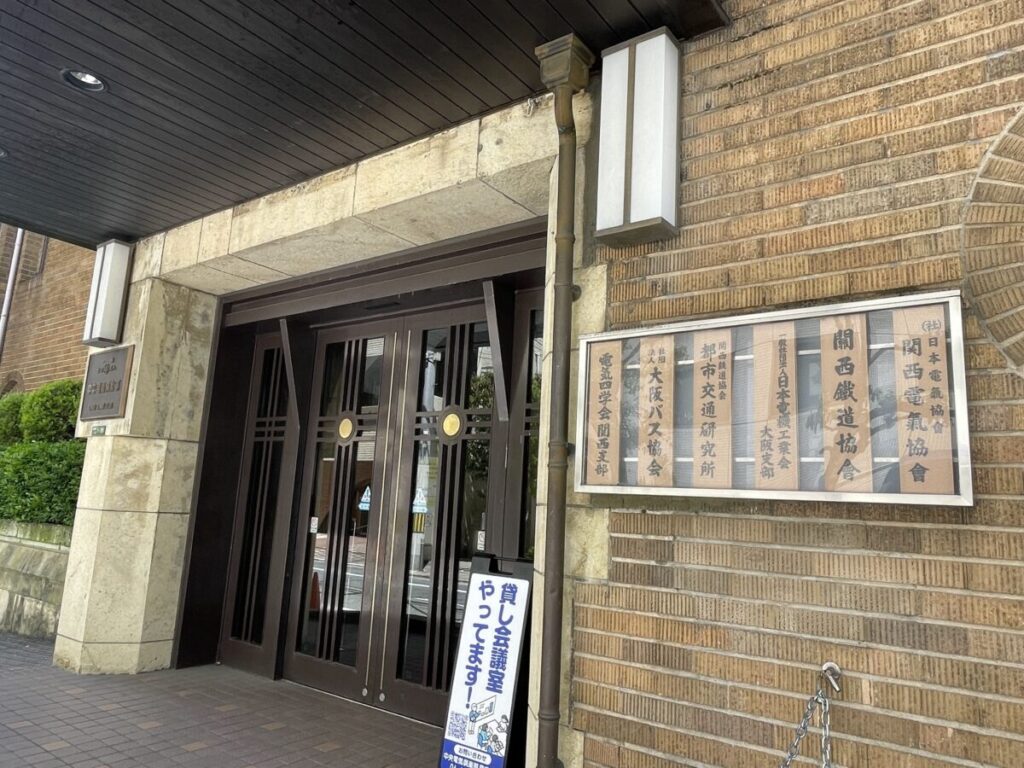
When I walk around Dojima-hama 2-chome, a building that’s clearly different from the surrounding office buildings catches my eye.
It’s the solid five-story “Chuo Denki Kurabu” (Central Electric Club) with tea brown scratch tiles covering it.
Founded in Taisho 3 (1914), the current building was completed in Showa 5 (1930).
The Kansai Branch of the Japan Electrical Association rebelled against the Tokyo-centered management and split off to become independent.
“The center of Japan is Osaka,” that’s the pride they had when they named it “Chuo Denki” and established this organization building.
In Showa 7 (1932), Matsushita Konosuke gathered his executive staff in the 5th floor hall of this building and announced his “Tap Water Philosophy.”
“To enrich people’s lives and eliminate ‘poverty’ from society by supplying high-quality products at low prices in large quantities, like tap water” – This is the place where the management philosophy advocated by Panasonic’s founder, Matsushita Konosuke, was born.
However, I can’t go inside. It’s an exclusive members-only social club with a dress code, so I can only look at the exterior.
Here too, I really feel the conviction and pride of the Osaka merchants.
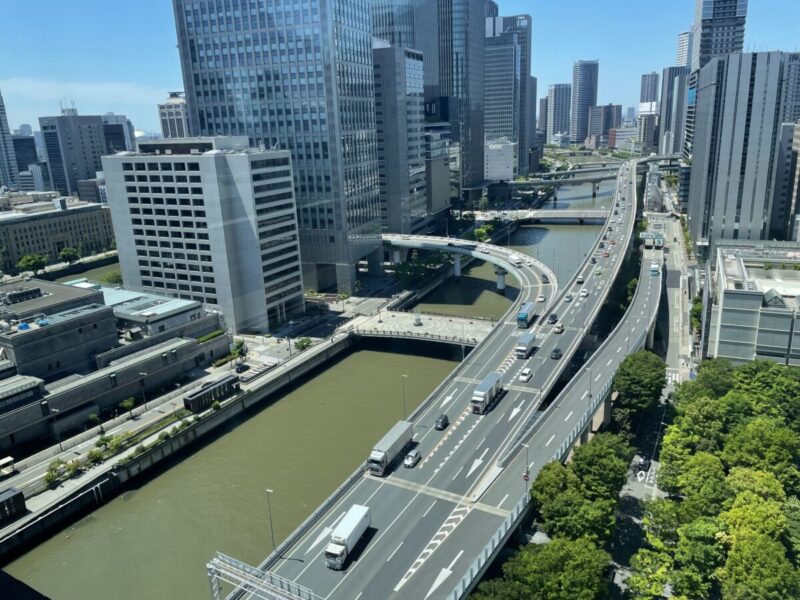
The 16th floor of the Osaka Dojima-hama Tower in Dojima-hama 1-chome has a free observation deck, and the view is really nice.
The Dojima River winds its way along, and now a highway runs along the riverside where warehouse estates (kura-yashiki) once lined up.
It’s a landscape of the water city that’s different from Tokyo.
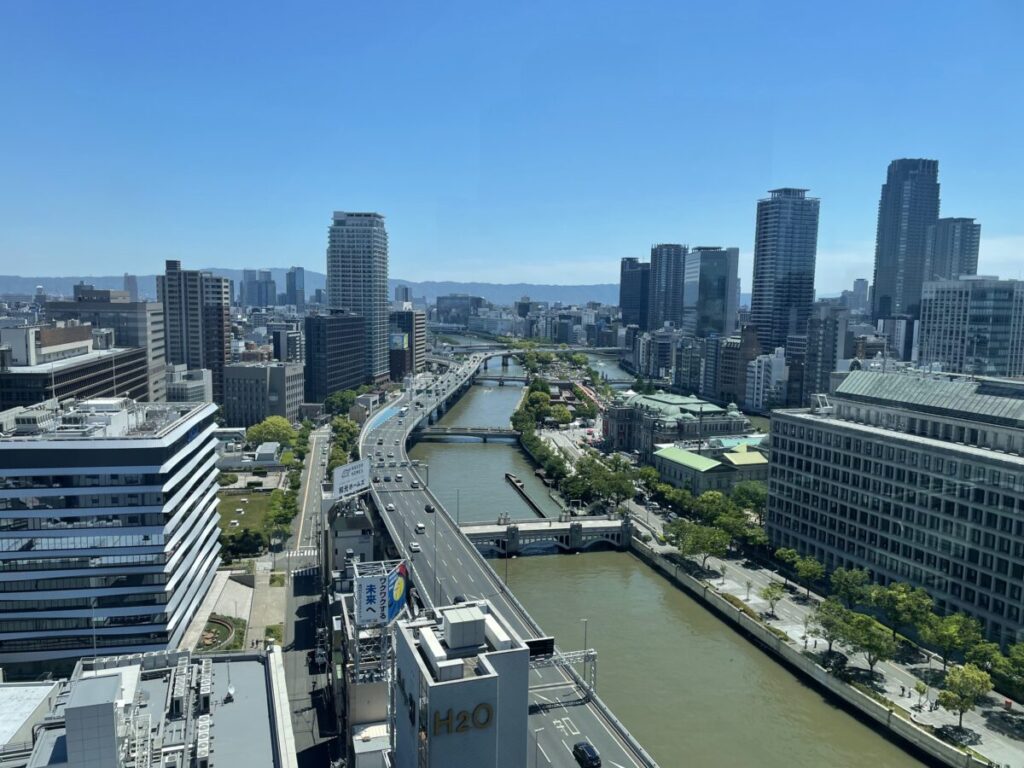
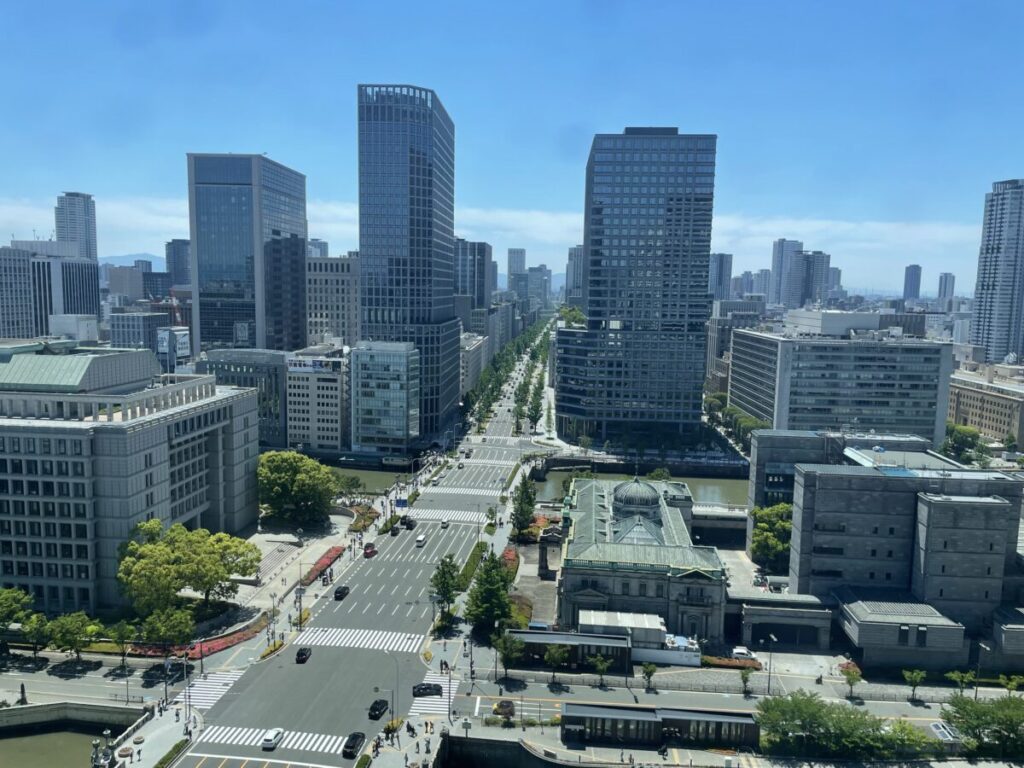
When I turn my gaze to the south, I can see the Midosuji (Osaka’s main commercial artery) stretching straight ahead.
From the Umeda Shindo intersection, it crosses the river at Ooebashi Bridge, Yodoyabashi Bridge, Shinsaibashi Bridge, and Dotonboribashi Bridge, continuing all the way to Namba.
The Midosuji, which is a one-way street heading south and has a width of 43.6 meters, becomes beautiful in autumn when the ginkgo trees lining the street turn golden.
Looking down from up here like this, you can really see how this little town is right in the middle of Osaka.
The night view is beautiful too.
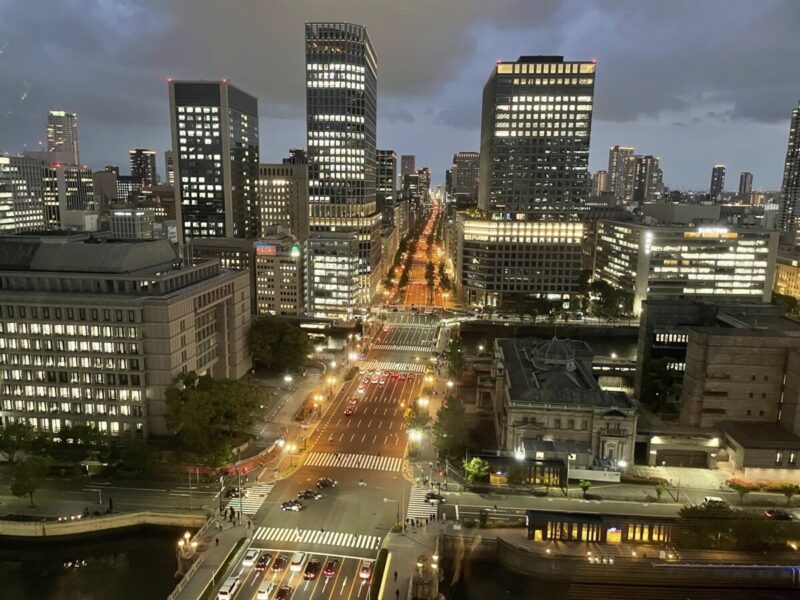
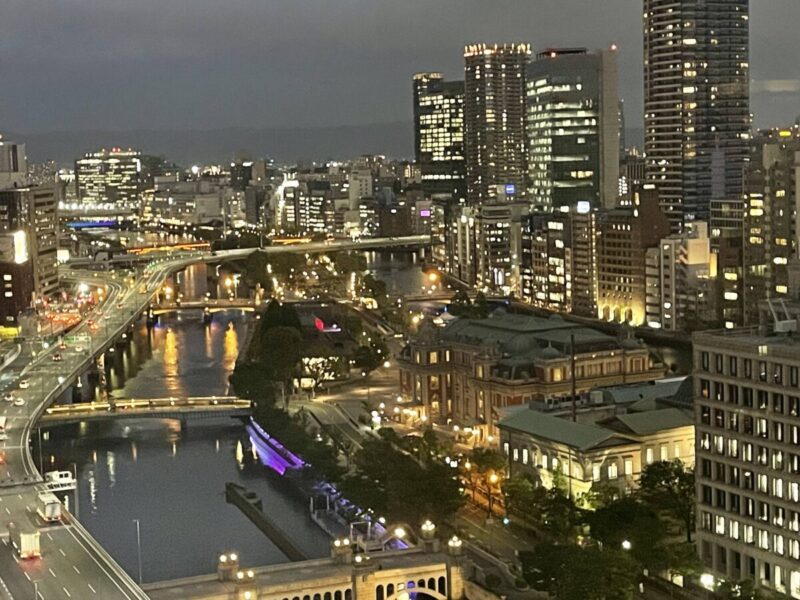
Dojima-hama 1-chome and 2-chome. It’s a small neighborhood where you can walk from one end to the other in about 20 minutes.
But the history runs deep. As you walk through the town, I hope you’ll think about the pride of Osaka merchants that has continued from the Edo period through the Showa (1926–1989) era and into the present day.
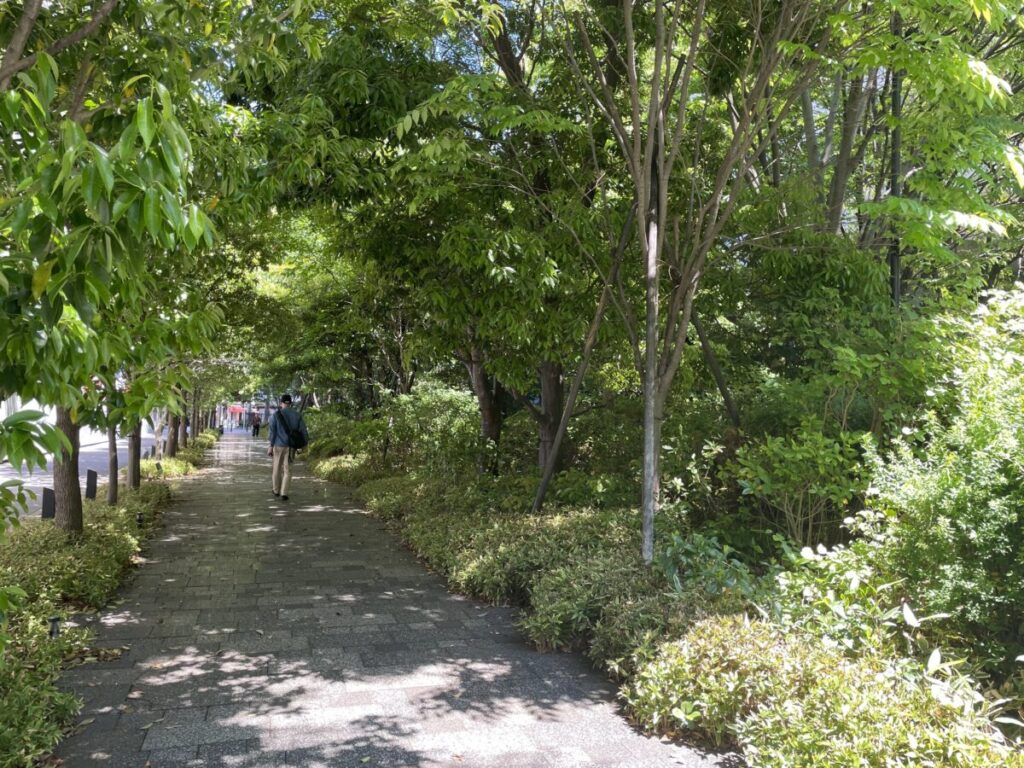
[Access]
Right next to JR Tozai Line “Kitashinchi Station” / Keihan Electric Railway “Oebashi Station” / Osaka Metro Midosuji Line “Yodoyabashi Station”

※コメントは最大500文字、5回まで送信できます