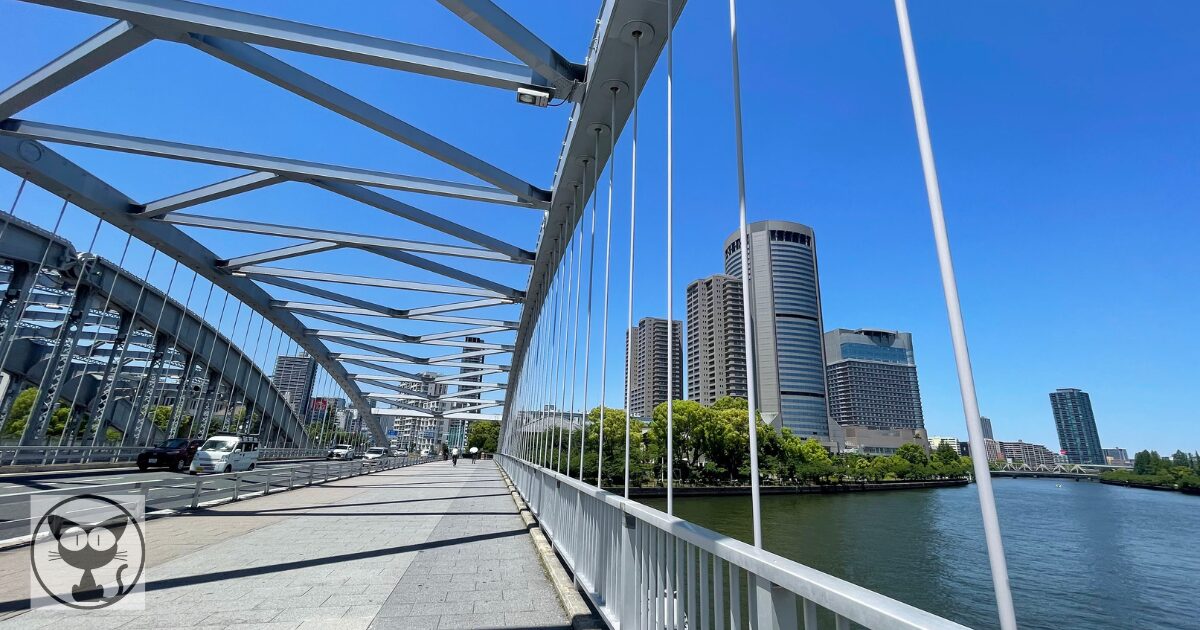
Along the Okawa River, known for the Mint Bureau’s “Sakura no Tōrinuke” (a cherry blossom passageway) and the fireworks of the Tenjin Matsuri (Tenjin Festival). During the Edo period, this riverbank was the best flower-viewing spot in Osaka.
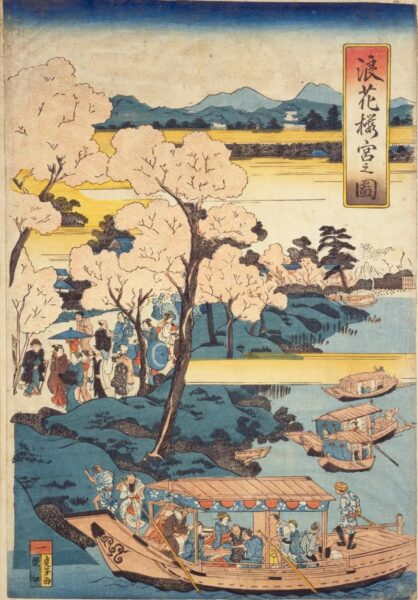
When you look at the nishiki-e (woodblock print) depicting “Naniwa Sakura Miya no Zu,” you can see people dressed up walking beneath fully bloomed cherry blossoms, and yatai-bune (pleasure boats) lined up on the river. Small boats were also going back and forth crossing to the opposite bank. During cherry blossom viewing season, there was an endless stream of boats carrying sightseers.
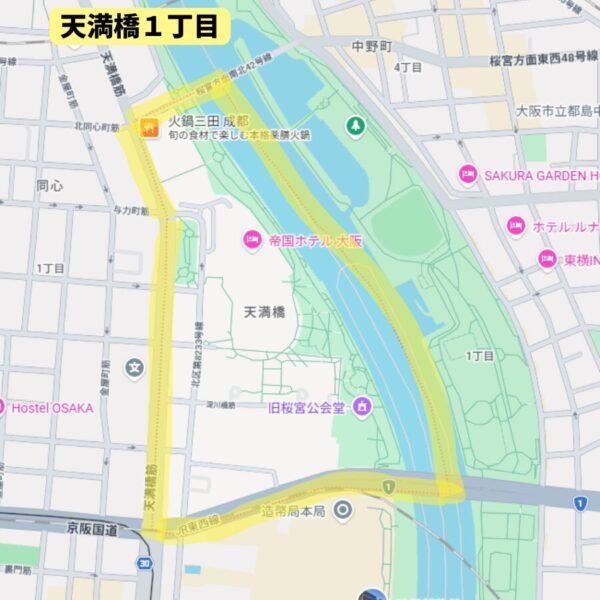
At the base of Genpachi Bridge, there’s a small stone monument standing in what used to be the location of a ferry crossing (watashiba).
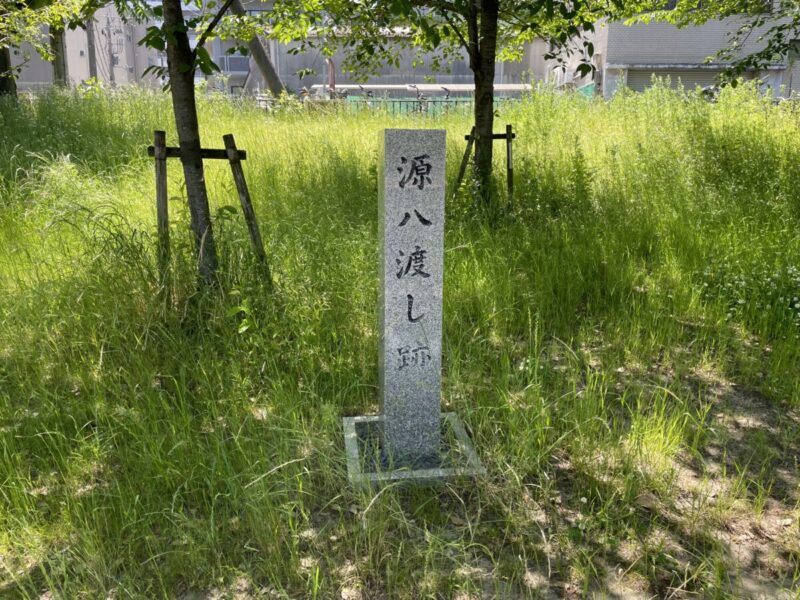
The name “Genpachi” comes from a person who operated a ferry boat at this location in the early Edo period. It was this ferry crossing that Yosa Buson wrote about in his poem “Crossing Genpachichi, the plum tree’s master.”
Until the bridge was built in the early Showa era (1926–1989), people used a ferry boat from this place for a long time.
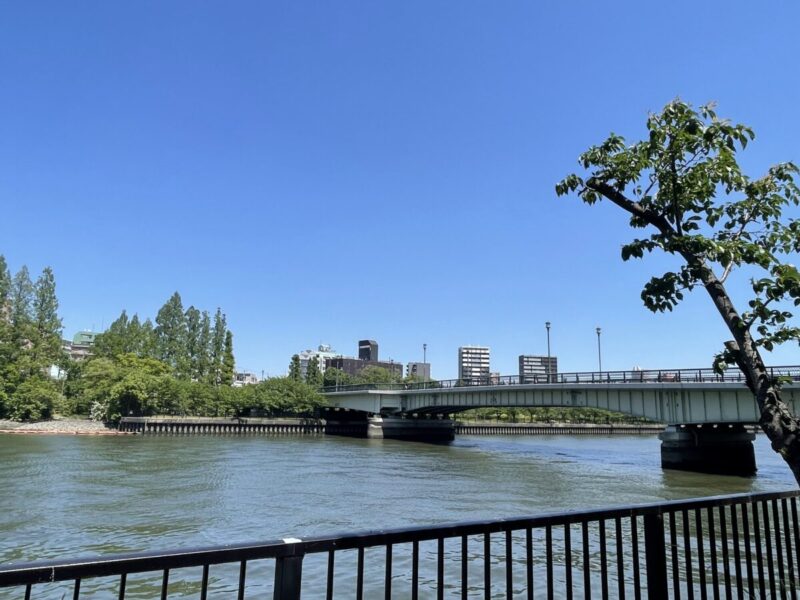
In Meiji 4 (1871), the appearance of this area changed completely.
The Meiji government established a mint factory for manufacturing currency as a modern nation-state. It was the “Zōhei-ryō (present-day Osaka Mint).”
Designed by Thomas Waters, a foreign architect from Ireland, and equipped with Western-style facilities together with foreign engineers invited from Europe and America, the facility began minting currency. Since then, it has continued to produce currency that forms the foundation of modern economy.
Back then, the woodblock prints that were made showed factory complexes with towering smokestacks and steamships crossing back and forth on the river while billowing black smoke.
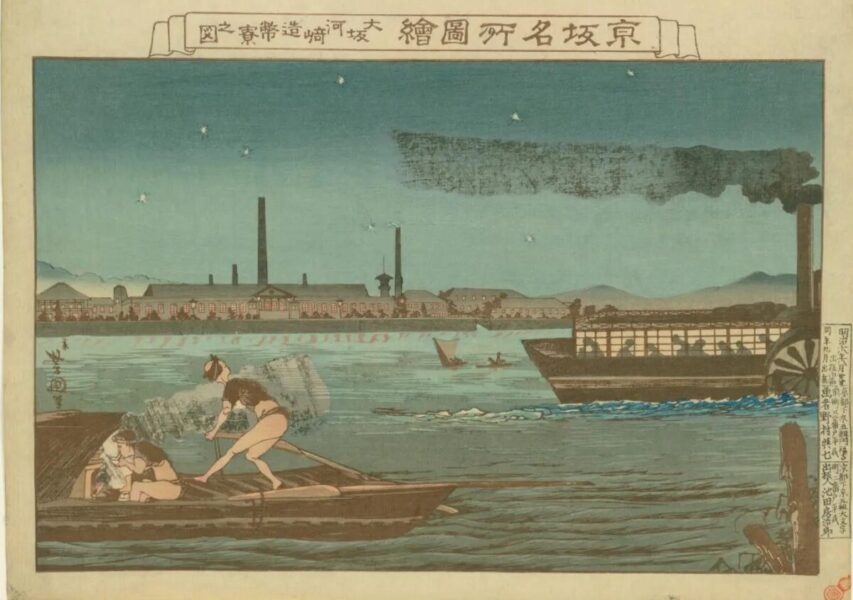
The “Zōhei-ryō” (mint facility) boasted vast grounds along the Okawa River when it was first established.
In the middle of the Meiji period, the northern half (north of National Route 1) was transferred to the Imperial Household Ministry and the area was reduced. The current Osaka Mint is located on what was the southern half.
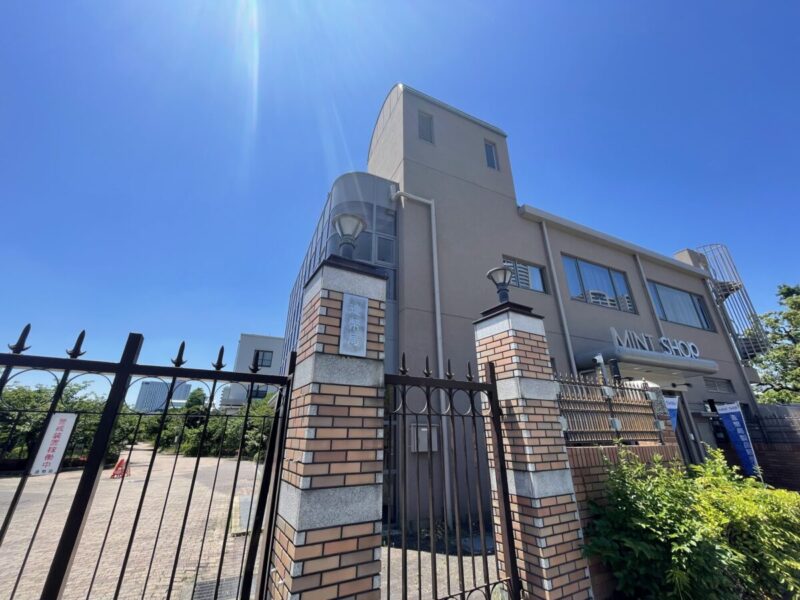
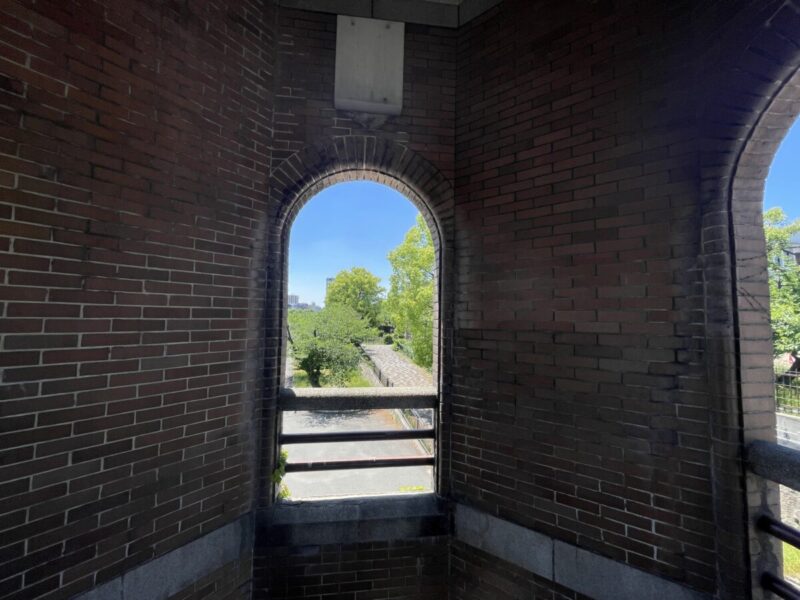
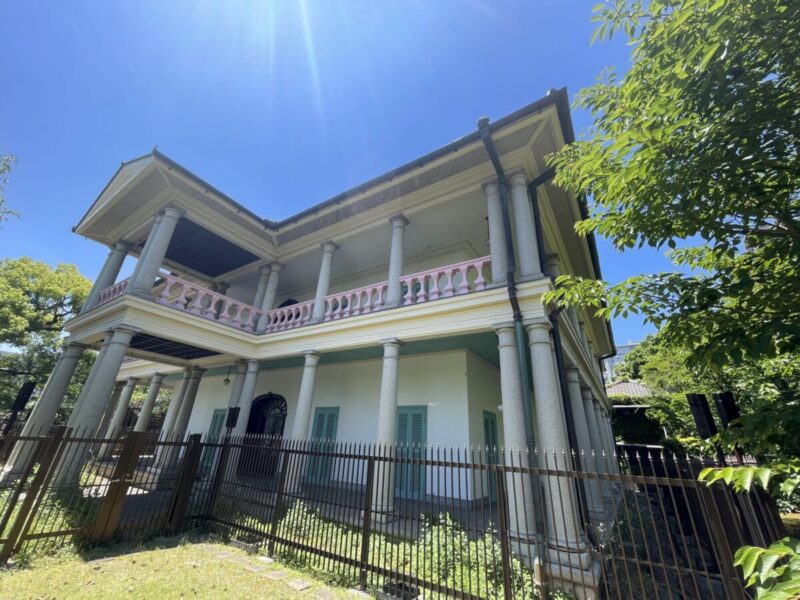
In Meiji 5 (1872), Emperor Meiji made an imperial visit to the Zōhei-ryō (mint facility) and personally named the building “Senpukan.” That building still stands today. After that, it played an important role as Osaka’s guest house for welcoming imperial family members and foreign dignitaries.
A two-story Western-style building in Veranda Colonial style with granite columns running around the veranda. Turquoise shutters, pink railings.
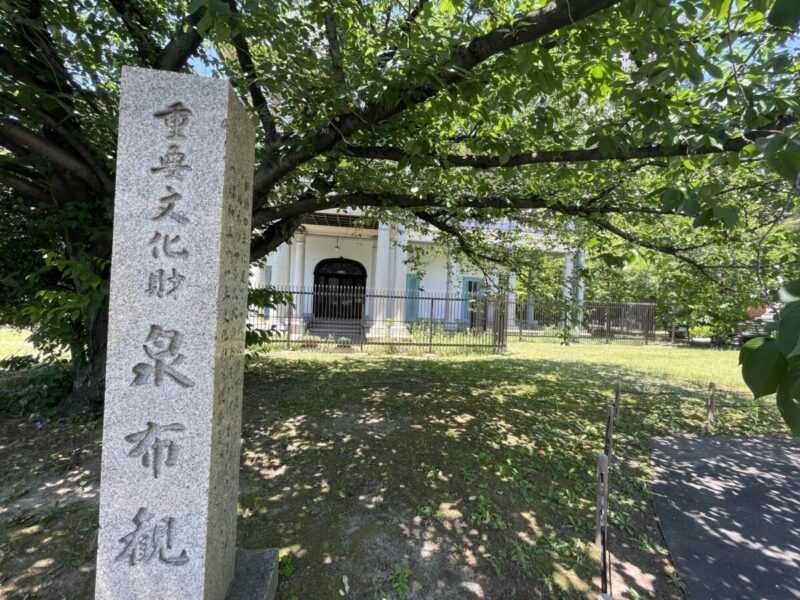
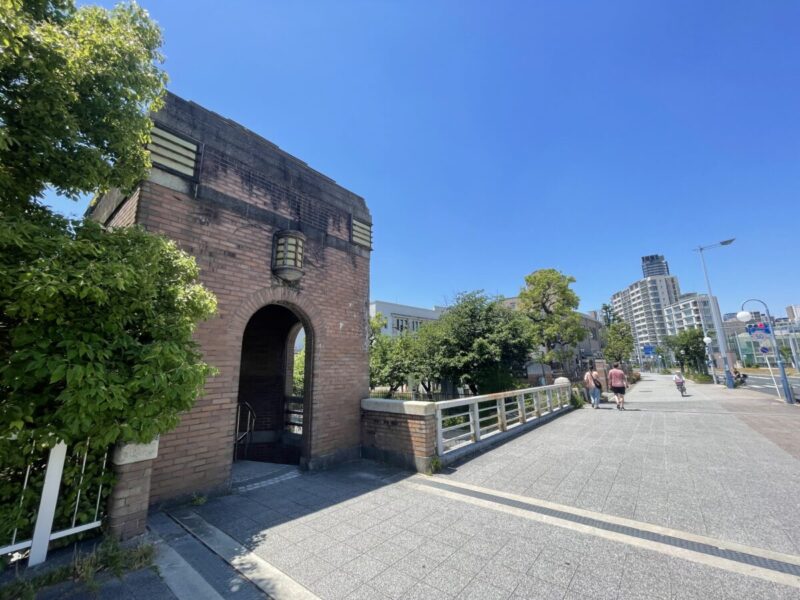
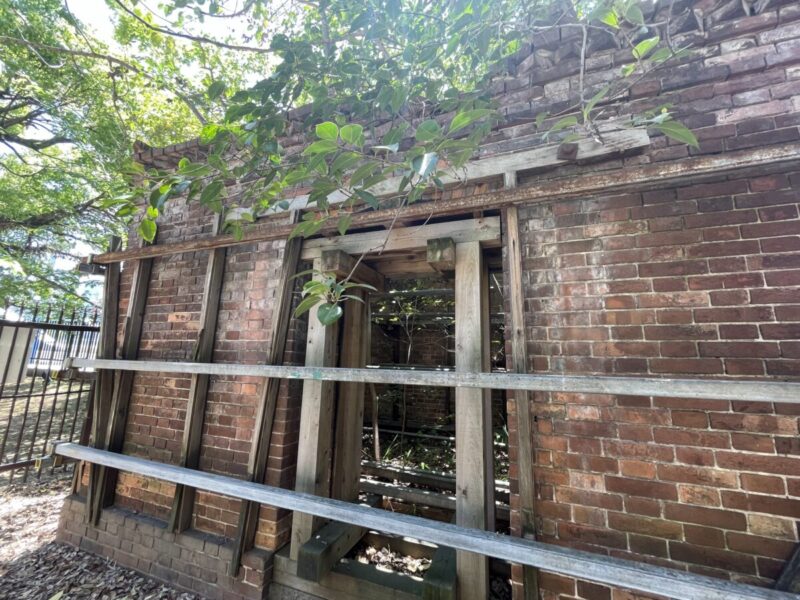
Right next to it, there’s a small brick structure surrounded by a fence.
It was a building attached to the dormitory where foreign engineers hired by the Zōhei-ryō (mint) lived. There used to be the same building on the north side as well, but it was torn down during road construction in the Taisho period, and only this one remains.
Bricks laid with a construction method unique to the Meiji period called furansu-zumi (French bond) retain traces of technology that was brought in from outside.
In the early Showa (1926-1989) period, the Meiji Emperor Memorial Hall was built by relocating the front entrance of a foundry factory. That entrance was designed by the same Waters who designed the Senpukan. It features six Tuscan stone columns, arched windows, and a triangular pediment.
After the war it became the Sakuramiya Public Hall (Sakuramiya Koukaido), and was used for many years as a library and citizen’s gallery, but it closed in Heisei 19 (2007). Currently it’s being used as a French restaurant and wedding venue.
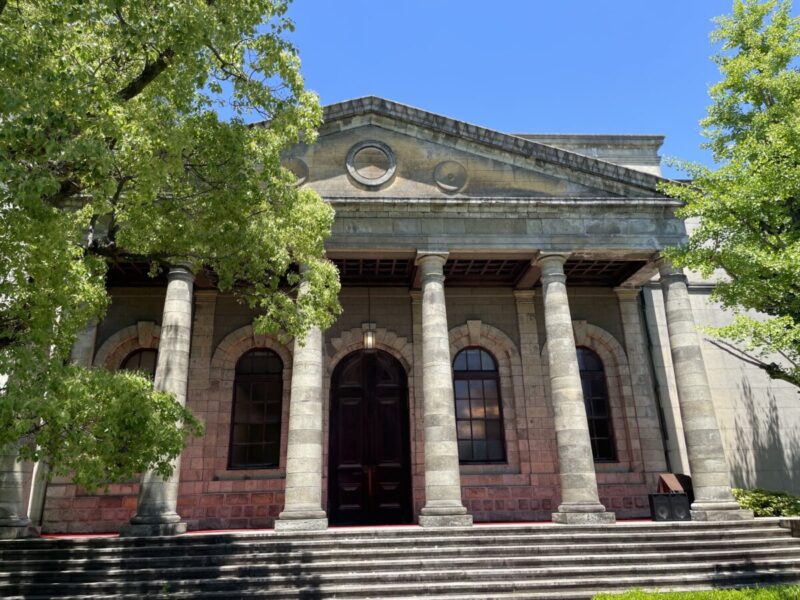
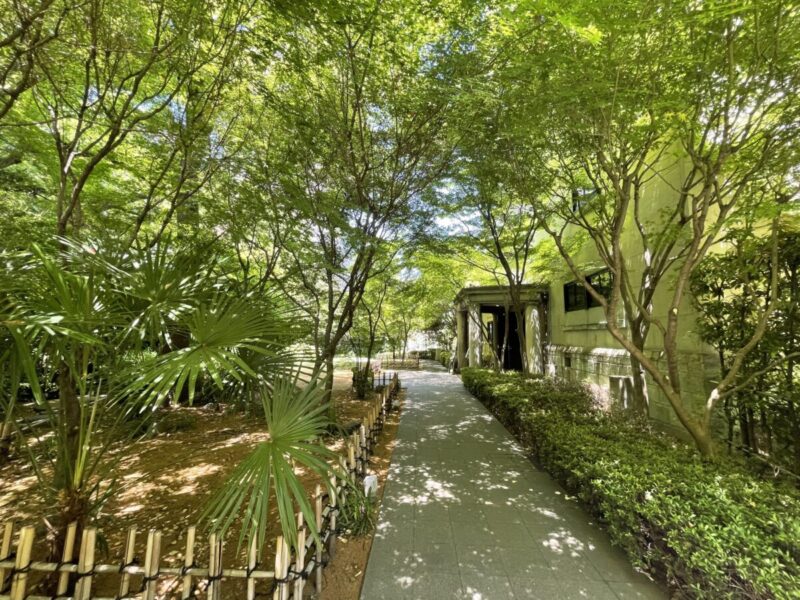
This is how buildings and traces built by the Meiji government still remain in this place today.
On the other hand, the land on the north side of the Zōhei-ryō (mint facility) was transferred from the Imperial Household Ministry to Mitsubishi Goshi Kaisha (present-day Mitsubishi Materials) in Meiji 29 (1896).
It supported Japan’s modern industry afterward as the “Osaka Smeltery”, which carried out the refining of gold, silver, and other metals.
A panoramic map of Osaka City issued during the Taisho period also depicts the characters “Mitsubishi Refinery” and smoke billowing from smokestacks.
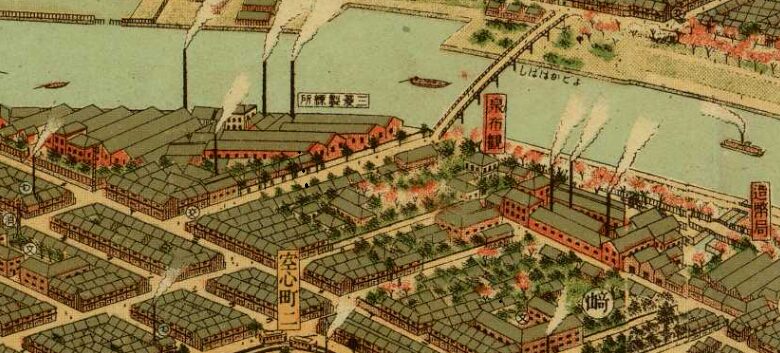
In Heisei 1 (1989), the smelting plant shut down its furnaces, and this place changed once again.
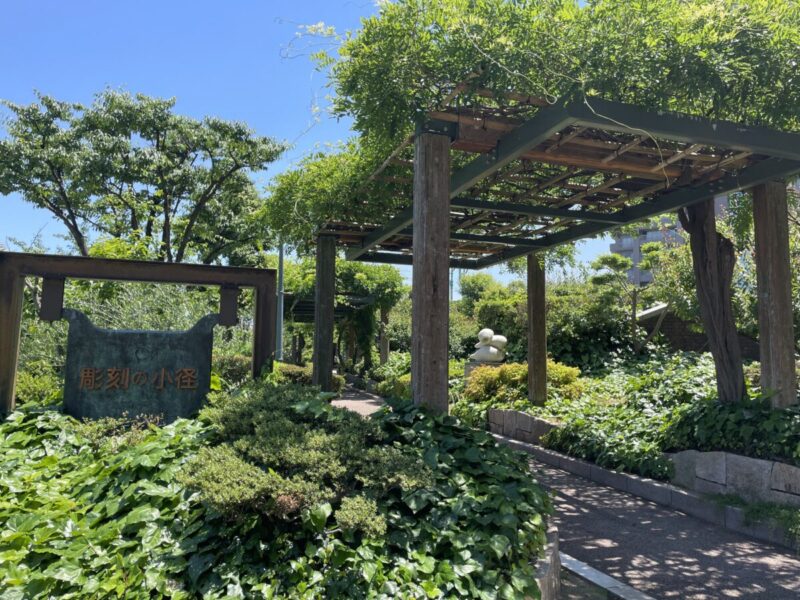
A “OAP” (Osaka Amenity Park) was built on that site. The concept was “from an industrial city to a comfortable urban space.” High-rise offices, apartments, and a waterfront promenade. In front of the main entrance, the stone gate pillars from the smelting plant era still remain today.
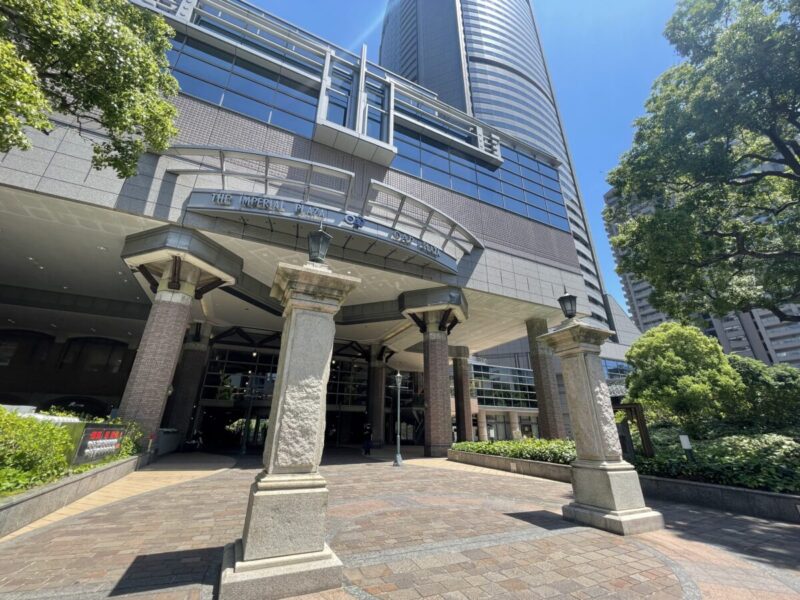
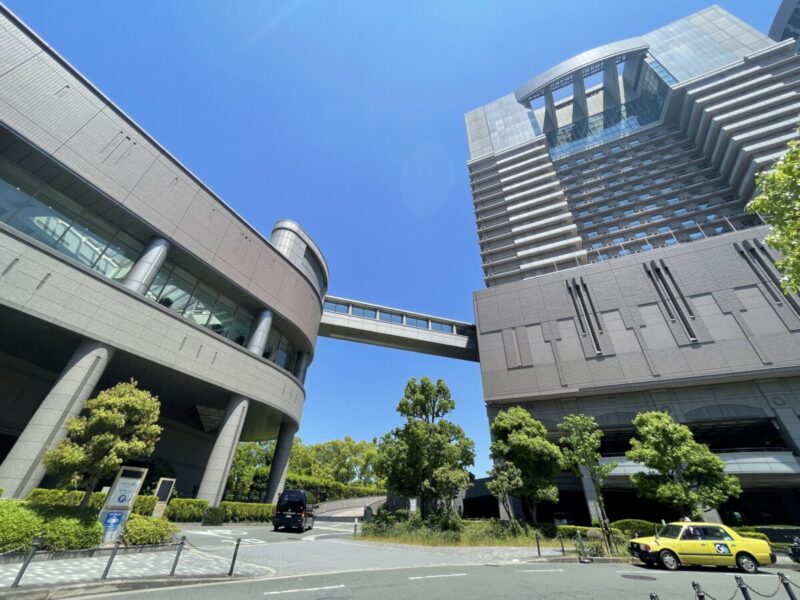
In 1996, the Imperial Hotel Osaka opened in this area adjacent to OAP. It’s a luxury hotel that was established in the Meiji period by business leaders like Shibusawa Eiichi and has welcomed foreign dignitaries.
In this location a bit removed from the center of Osaka, that representative hotel of Japan continues to inherit the role as Osaka’s official state guest house that Senpukan once carried.
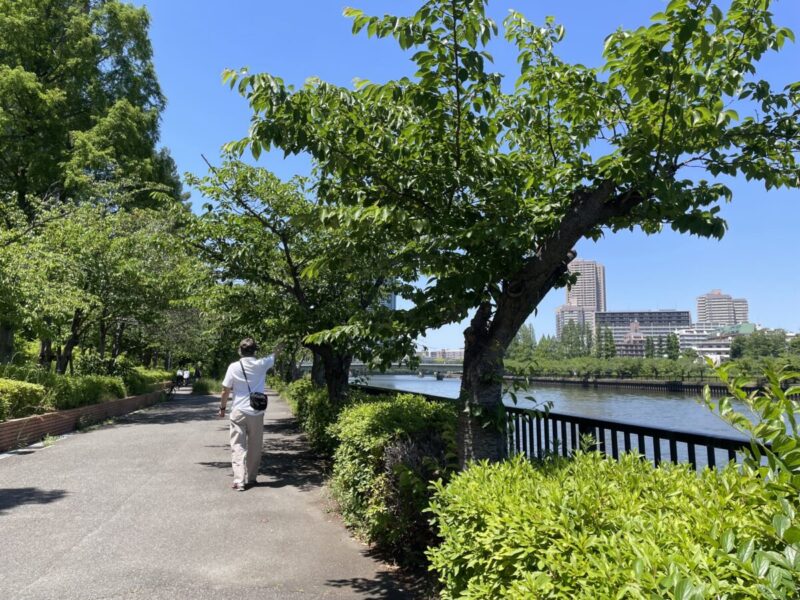
The riverbank that was once crowded with cherry blossom viewers during the Edo period transformed into a factory district that led Japan’s modernization after the Meiji era. Day after day, furnaces refining gold, silver, and copper burned along this river, and the energy that supported high economic growth filled the area along the water.
The city, having finished its role, is changing its face once again. On the well-maintained waterside promenade, cherry blossom season brings flower-viewing crowds, and in summer, people gather to watch the fireworks of the Tenjin Matsuri (Tenjin Festival). The banks of the Okawa River have become a place where people gather once more.
I’d like you to experience this town on a walk, feeling the passage of different eras through its quiet streets.
[Access] About 15 minutes walk from Sakuranomiya Station (JR Osaka Loop Line) or Osaka Temmangu Station (JR Tozai Line)

※コメントは最大500文字、5回まで送信できます